


Texas Hold'em is the game most people mean when they say poker. Two cards face down, five shared cards face up, four rounds of betting, and the best five-card hand at showdown takes the pot. This page walks through the order of play, what each betting action actually commits you to, and the one rule that catches new players most often.
The four betting rounds
A hand runs in four stages, and the number of shared cards on the table tells you which stage you are in.
Preflop. You have two cards and nothing else. The player to the left of the big blind acts first. This is the round where most hands should be folded.
Flop. Three shared cards. Betting starts with the first active player to the left of the button. From here to the river, the last player to act is always the button, which is why position matters so much.
Turn. A fourth shared card. Same betting order, higher stakes for anyone still drawing.
River. The fifth and final shared card. No more cards are coming, so a call here is a pure judgement on what your opponent holds.
What each action commits you to
New players lose money by treating these four actions as similar. They are not.
Check. You pass the action without putting money in, but only when no one has bet before you. You cannot check if there is a bet in front of you.
Call. You match the current bet. In cash terms this is the cheapest way to continue, and it is also the most common way beginners bleed chips, because calling with a weak hand on every street adds up fast.
Bet or raise. You put in more than the current bet. A bet opens the action; a raise increases an existing bet. Both put pressure on opponents and both commit you to more money if you are called.
Fold. You give up the hand and any money already in the pot. Folding is not losing. Folding a hand that was going to lose anyway is the single most profitable habit in poker.
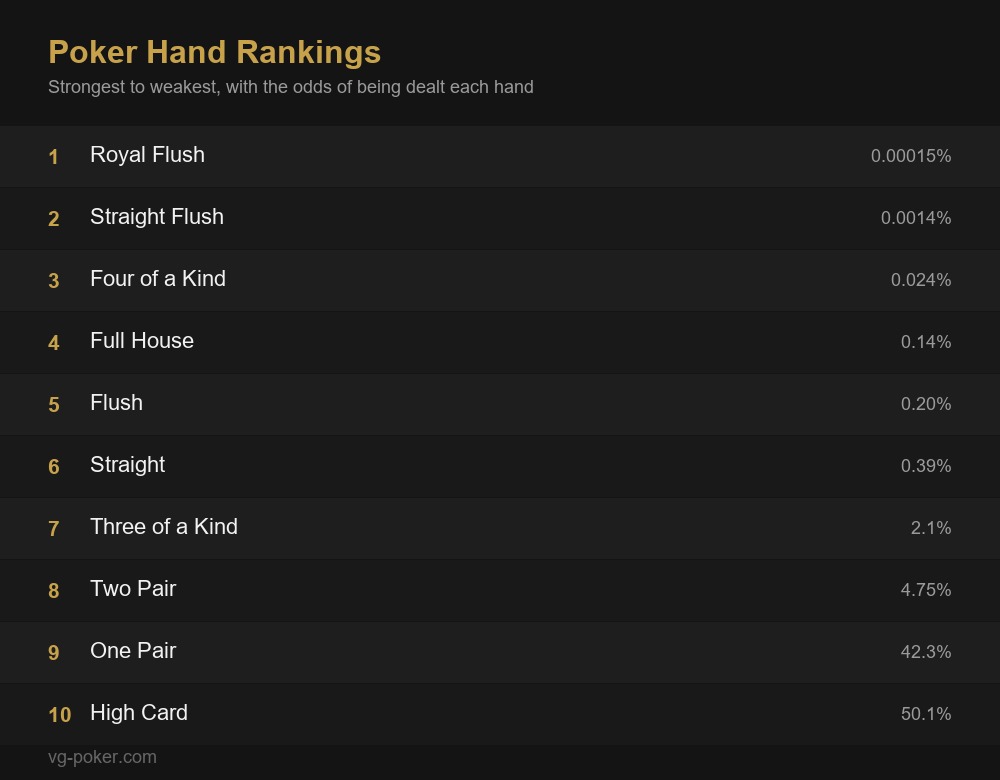
The rule that catches new players: you play your best five cards
You are dealt two cards and five shared cards appear, so you have seven cards available. You do not have to use both of your hole cards. You choose the best five-card combination from all seven, which means the board alone can be your hand.
This is why a player holding an ace can lose to the board: if the five shared cards already form a straight, everyone still in the hand has that straight, and the winner is decided by the highest card each player can add to it. Your hole cards only matter if they improve on what the board already gives you.
Position: why the button is worth more than good cards
The button is the last seat to act on the flop, turn and river. That means every other player has already decided before you commit anything. You see their checks, their bets and their folds first.
In practice this changes which hands are playable. A marginal hand like a small suited connector is worth folding from an early seat and worth raising from the button, because the same cards become profitable when you act last. Position is not a tiebreaker; it is a reason to play a hand at all.
Blinds, and why the action starts where it does
Two players are forced to put money in before any cards are dealt: the small blind and the big blind. These exist so there is always something to win, otherwise everyone could fold every hand for free.
Preflop action starts with the player to the left of the big blind, which is called under the gun. That player has the worst position and has paid nothing to see the cards, so the range of hands worth playing from there is the tightest at the table.
Fast-fold and all-in formats change the pace, not the rules
If you have played a fast-fold table, you already know the rules and only the tempo is different. In a fast-fold game you can fold out of turn, and the table immediately deals you into a new hand with new opponents instead of making you wait for the current one to finish. The hand rankings, betting order and showdown rules are identical to a normal table.
All-in-or-fold formats work the same way. The decision is compressed to one moment, but what beats what is unchanged. Learning standard Hold'em first makes every variant easier to pick up, because you are only adjusting the pacing rather than learning a new game.
How to start without installing anything
The fastest way to understand these rules is to play a few dozen hands at the lowest stakes, where the cost of a mistake is small and the feedback is immediate. Reading about position does not make it click; being out of position and losing a pot does.
Questions new players ask
Do I have to use both of my hole cards?
No. You use any combination of your two hole cards and the five shared cards to make the best five-card hand. You can use one, both, or neither.
What happens if two players have the same hand?
The pot is split. If the hands are identical down to the fifth card, the players share it. Kickers only decide the winner when the main part of the hand is the same but the remaining cards differ.
Can I check after someone has bet?
No. Checking is only available when no bet has been made in front of you on that street. If there is a bet, your options are call, raise or fold.
Is a flush better than a straight?
Yes. A flush ranks above a straight. The full order is royal flush, straight flush, four of a kind, full house, flush, straight, three of a kind, two pair, one pair, high card.
What is a kicker?
The card that decides a tie. If two players both hold a pair of kings, the higher fifth card wins, which is why the size of your side card matters when you play a hand like king-ten.
*Rules described here follow standard no-limit Texas Hold'em as played at most tables. House rules and tournament structures can vary, and the in-app rules screen is always the authoritative version.*